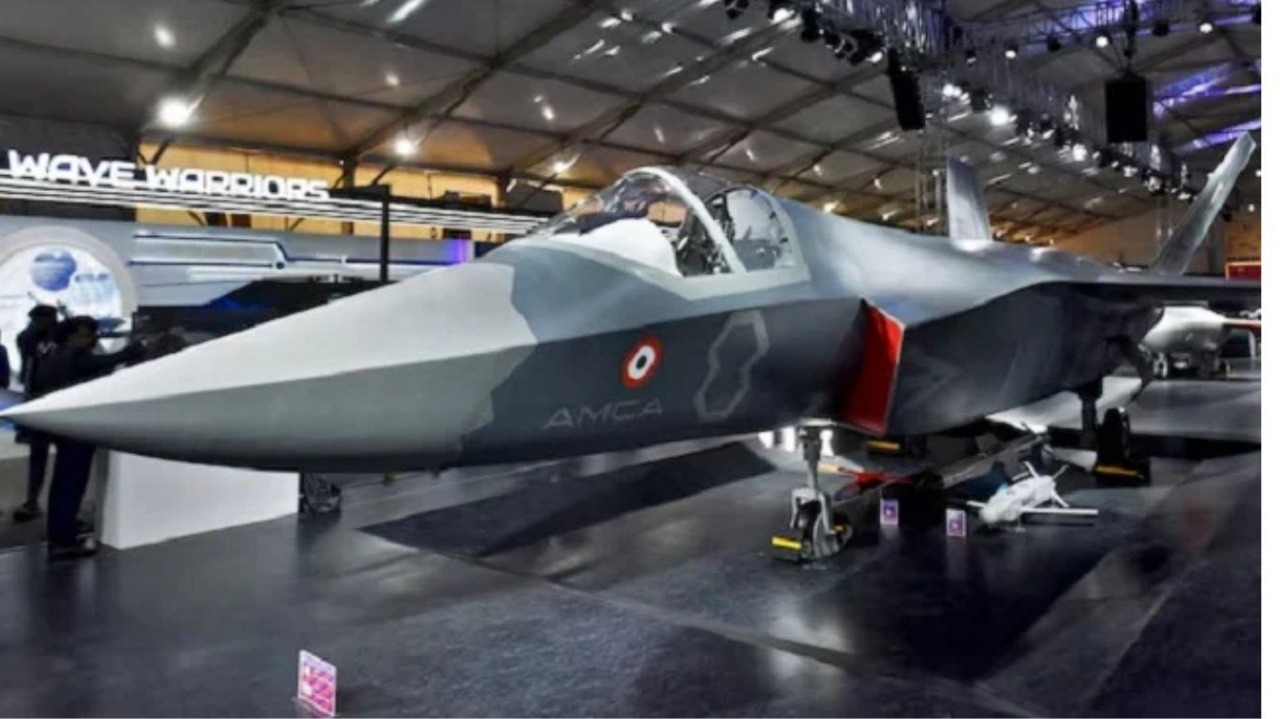
India has taken a decisive leap in its indigenous defence capabilities by announcing a landmark collaboration with French aerospace giant Safran to co-develop and manufacture advanced fighter jet engines domestically. The agreement, confirmed by Defence Minister Rajnath Singh at the Economic Time...
India has taken a decisive leap in its indigenous defence capabilities by announcing a landmark collaboration with French aerospace giant Safran to co-develop and manufacture advanced fighter jet engines domestically. The agreement, confirmed by Defence Minister Rajnath Singh at the Economic Times World Leaders Forum, marks a strategic milestone in India’s fifth-generation fighter aircraft program and aligns with the broader Aatmanirbhar Bharat vision for defence self-reliance.
Project Scope And Technical Ambition
The joint venture will design, develop, test, certify, and produce a 120-kilonewton thrust class engine for India’s Advanced Medium Combat Aircraft (AMCA) and future platforms
The project will be executed in partnership with the Defence Research and Development Organisation (DRDO) and its Gas Turbine Research Establishment (GTRE)
The engine will feature full intellectual property ownership and licensing control by India, ensuring long-term strategic autonomy
Estimated to cost around 7 billion dollars, the initiative includes complete technology transfer from Safran, a first-of-its-kind arrangement in India’s aerospace sector
Strategic Importance For AMCA Program
The AMCA is India’s indigenous fifth-generation stealth fighter jet, designed to feature supercruise capability, internal weapons bay, sensor fusion, and advanced avionics
The first two squadrons of AMCA will be powered by GE-F414 engines, while the remaining five squadrons will use the co-developed 120-kN engine
The engine deal is expected to accelerate the AMCA’s production timeline, with full deployment targeted by 2035
Why Safran Was Chosen
Safran already manufactures helicopter engines in India and has a strong operational footprint, including an MRO facility in Hyderabad for Rafale’s M88 engines
The French firm’s proposal was evaluated and cleared by DRDO as the most viable option, beating out competing bids from Rolls-Royce and General Electric
The collaboration builds on the India-France Horizon 2047 strategic partnership, which designates 2026 as the Innovation Year
Defence Ecosystem And Industrial Impact
The project will create a full-fledged aero-engine manufacturing ecosystem in India, including supply chain development, testing infrastructure, and skilled workforce training
It is expected to generate thousands of high-tech jobs and catalyze private sector participation in defence manufacturing
The initiative complements India’s recent defence production surge, which has tripled from Rs 40,000 crore in 2014 to over Rs 1.5 lakh crore in 2025
Broader Defence Modernisation Context
India has already signed a multi-billion-dollar deal to acquire 26 Rafale Marine jets from Dassault Aviation, adding to the 36 Rafales in service
The country has launched its first indigenous aircraft carrier, new submarines, warships, and a long-range hypersonic missile test in recent years
Defence exports have grown nearly 35 times in the past decade, reaching Rs 23,622 crore in 2024–25, with a target of Rs 50,000 crore by 2029
Conclusion
The India-Safran fighter jet engine collaboration marks a transformative moment in India’s aerospace and defence landscape. By securing full technology transfer and domestic production rights, India is not only addressing a long-standing capability gap but also positioning itself as a future exporter of advanced military propulsion systems. As the AMCA program gains momentum, this partnership stands as a testament to India’s resolve to lead in next-generation defence innovation.
Sources: Outlook Business, MSN India, Dawn, News18, The Hindu, CNBC TV18.